
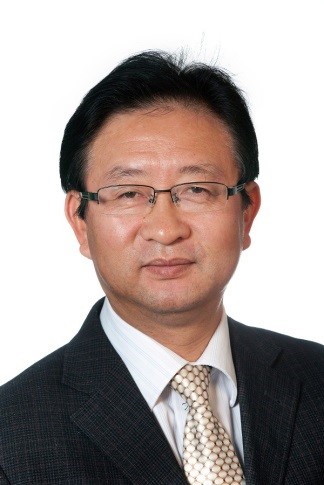
Professor Yanchun Zhang
Distinguished Professor, Zhejiang
Normal University, China
Emeritus Professor, Victoria University, Australia
Yanchun Zhang is currently distinguished professor at Zhejiang Normal University, China and Emeritus Professor at Victoria University, Australia. He is Fellow of The Royal Society of Medicine of United Kingdom (FRSM), and Foreign Academician of Russian Academy of Natural Sciences (RANS). Dr. Zhang is a founding editor and editor-in-chief of Health Information Science and Systems Journal (Springer) and World Wide Web Journal (Springer). His research interests include databases, data mining, social networking, web services and e-health / digital health and information security. His research work has significantly impacted health informatics and information security, especially in developing data analytic skills and AI techniques for smart medicine and health. He has published over 500 research papers in international journals and conference proceedings. He authored/co-authored 5 monographs and edited a dozen of books in the related areas, and supervised 40 PhDs and post doctors in completion. He speaks regularly at international conferences in the areas of data engineering / data science and health informatics. He has serviced as an expert panel member at various international research funding agencies like Australia Research Council (ARC), UK’s Medical Research Council (MRC) and Australia’s National Health and Medical Research Council (NHMRC).
Speech Title: Smart Medicine: Medical Data Analysis / AI Applications for Patient Monitoring, Disease Diagnosis, Prediction and Health Management
Abstract: Recent development or maturation of big data analysis and AI technology has impacted many areas. As one of the most promising areas, Health care and medical service is now becoming more data-intensive, evidence-based and AI-guided. In this talk, we will introduce several innovative data mining / AI techniques and case studies to address the challenges encountered in e-health and medical big data. This includes techniques and development on medical data streams, medical image processing, correlation analysis, abnormal detection and risk predictions, including diagnosis of sleeping and mental health. We will also discuss the challenges and future directions of applying AI in medicine and health research.
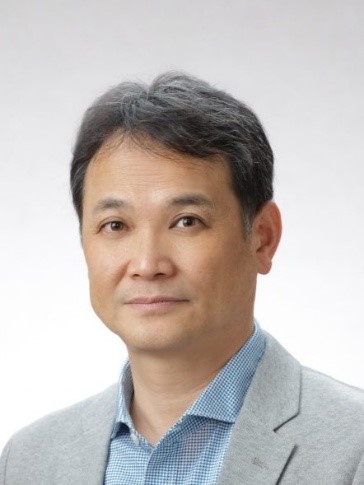
Professor Hiroaki Ogata
Kyoto University, Japan
Hiroaki Ogata is a
Professor and Director at Academic Center for Computing and
Media Studies (ACCMS), Kyoto University, Japan. His research
interests include Learning Analytics, Educational Data
Science, Computer Supported Ubiquitous and Mobile Learning,
CSCL (Computer Supported Collaborative Learning). He has
published more than 700 peer-reviewed papers including SSCI
Journals and top international conferences. He has received
APSCE (Asia-Pacific Society for Computers in Education)
Distinguished Researcher Award in 2014, several Best Paper
Awards and gave keynote lectures in several countries.
Currently he is the President of APSCE, an associate member
of Science Council of Japan, and the Director of
Evidence-Driven Education Research Council, Japan.
Speech Title: LEAF: Learning Evidence and Analytics Framework for Adaptive Learning
Abstract: With the development of digital learning technology platforms, users’ interaction trace data can be stored in a standardized format as teaching and learning logs during such educational activities. The Learning and Educational Technology Research Unit at Kyoto University has been developing a learning and evidence analytics framework (LEAF), an integrated technology framework that incorporates methods and tools in learning platforms that are implemented at K12 schools and universities. We conducted research to investigate learning and teaching episodes and their effects to systematically inform practice. This talk will present LEAF and the overall approach of the research and practice that was achieved toward supporting evidence-based practices in education with the Learning Analytics framework within Japan and international countries.